The Complete Guide to Austin High Rise Living
New to Austin? What counts as a high rise, the five districts, rent and concession ranges, and the trade-offs against suburban living.
By the Austin High Rise Apartment Team · · 8 min read
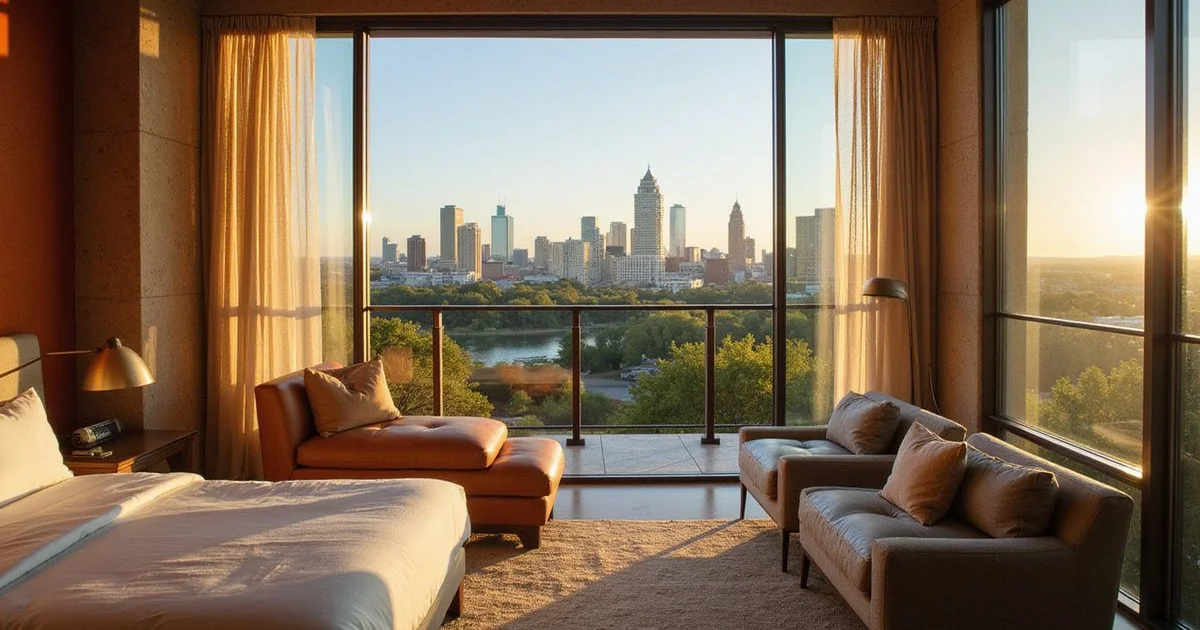
What is Austin high rise living, and is it for you?
You know how the Austin skyline seems to sprout a new glass tower every time you look up? That rapid vertical growth has fundamentally changed the real estate landscape for local business owners and homeowners looking to downsize.
Our team watched the downtown footprint add more residential towers between 2020 and 2026 than in the previous three decades combined. The metro grew by roughly 58,000 people a year during that stretch, driven by corporate relocations from Apple, Tesla, Google, Oracle, Meta, Samsung, Dell, Amazon, and Indeed. The majority of that growth landed in a dense 2-mile pocket between Congress Avenue and Rainey Street, bordered by Lady Bird Lake and the Texas State Capitol.
This austin high rise living guide is for renters who are new to Austin high rise apartments and need a clear picture of what the market looks like right now.
We are going to break down the specific neighborhoods, review current 2026 pricing data, and outline the exact trade-offs of urban living.
What counts as a high rise?
In the local real estate market, a true high rise means 10 or more residential stories. Buildings with 7 to 9 stories only make our mid-rise list when their finishes, amenities, and price points match premier luxury standards.
Our internal database tracks 23 Class A+ towers meeting this strict criteria. Developers built the vast majority of these properties after 2015. We verify story counts through the Council on Tall Buildings and Urban Habitat, architectural firm records, and municipal filings.
Decisions come down to micro-location
In Austin’s high rise market, the choice isn’t just which building. It’s which block, which floor, and which direction the windows face. For example, a south-facing unit near Lady Bird Lake commands a premium over a north-facing unit on a lower floor.
When living in a high rise in austin, you can usually expect concrete construction and floor-to-ceiling glass. You will also find a staffed lobby or concierge, controlled access, structured parking, and an amenity deck with a pool. The newest addition to the skyline is the Waterline tower at 98 Red River Street. This massive 74-story mixed-use building completed construction in August 2026 and now holds the title of the tallest building in Texas.
Living in a property of this scale means elevators, shared walls, and garage fees.
The five Austin high rise districts
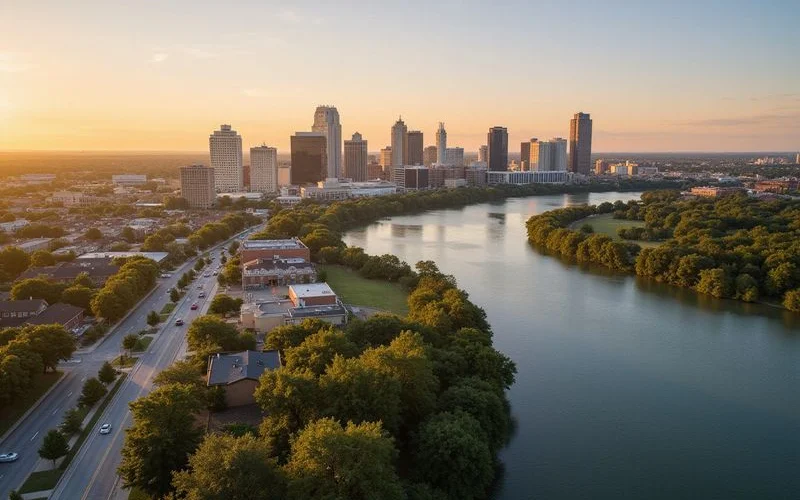
The austin high rise districts divide the downtown core into five distinct neighborhoods with very different atmospheres.
| District | Towers | Rent range | Feel |
|---|---|---|---|
| Rainey Street & Lady Bird Lake | 6 | $1,369 to $45,000 | Lively, walkable, lake-side, trail at the door |
| Congress Avenue & Republic Square | 4 | $2,161 to $22,510 | Downtown spine, Capitol views, quieter evenings |
| West Downtown & Seaholm | 5 | $1,824 to $10,485 | Calmer, Second Street shops, quickest MoPac access |
| East Downtown & Brazos | 5 | $1,804 to $25,000 | Red River music, East 11th, largest layouts |
| North Austin & Beyond Downtown | 3 | $1,415 to $13,275 | Barton Springs Road and North Austin options |
Rainey Street and Congress Avenue
Rainey Street & Lady Bird Lake is the densest cluster of luxury towers per block in Texas. The Butler Trail sits at the end of the street, and the famous Rainey bars operate just below. Lower floors facing the street will hear heavy weekend crowds and construction noise from ongoing development. Upper floors facing the lake trade that noise for incredible water views. Start your research with our Rainey Street & Lady Bird Lake district guide.
Congress Avenue & Republic Square functions as the civic and business spine of the city. Renters here get Capitol views, easy access to Republic Square Park, and a very short walk to the Google and Meta downtown offices. This area features the strongest transit access and provides a much quieter evening environment than the entertainment districts. Hanover Republic Square is a standout 2022 addition here with an impressive rooftop pool.
West, East, and North Corridors
West Downtown & Seaholm wraps around the Seaholm redevelopment, the Second Street District, and Shoal Creek. It offers a calmer environment than Rainey while keeping you close to the Pfluger Pedestrian Bridge. This area holds the tallest purely residential tower we cover, The Residences at ATX Tower. Locals love the convenience of the Trader Joe’s and the Central Library located right in this neighborhood.
East Downtown & Brazos runs along Brazos Street, the Red River Cultural District, and East 11th. Our inventory shows this district has the biggest homes available. You can even find massive 5-bedroom units at The Modern Austin Residences. This location provides the absolute fastest drive east to the airport and the Tesla Gigafactory.
North Austin & Beyond Downtown covers three premium towers outside the main core. The Catherine sits on Barton Springs Road just south of the river. The Bowen and Solaris House offer fantastic luxury options up north near The Domain for renters who commute to northern tech campuses like Apple and Indeed.
What does an Austin high rise cost?
The exact cost of downtown austin high rise apartments depends heavily on the submarket, the floor level, and current market supply.
Every number below comes from recent Q2 2026 data showing a localized market correction.
- Downtown high rise 1BRs: $1,800 to $3,500+
- Downtown / Rainey Average Rent: $2,490 a month
- Concessions: 8 to 10 weeks free is typical right now
- Austin Metro vacancy: 12.29%, dropping from a peak in Q3 2024
- Downtown rent growth: +0.1% year over year, while the broader metro sits at negative 3.88%
Floor Level and Hidden Fees
Across our 23 tracked towers, starting rents begin at $1,369 for a studio at The Quincy. Prices top out at $45,000 for the largest residence at Paseo. The specific floor and view change the price just as much as the building itself. A 22nd-floor lake-facing unit at Paseo can run over $8,000 monthly. The exact same floorplan on the 10th floor facing Rainey Street costs about $4,500.
You must budget carefully beyond the base rent. Reserved parking commonly runs $175 to $250 a month in a downtown garage. Pet rent averages $25 to $50 per animal, and buildings often charge a $500 non-refundable pet fee upfront. You should also expect administrative charges, amenity fees, valet trash costs, a utility package, and mandatory renter’s insurance.
Our comprehensive guide to lease terms and fees covers every single line item you will see on a contract.
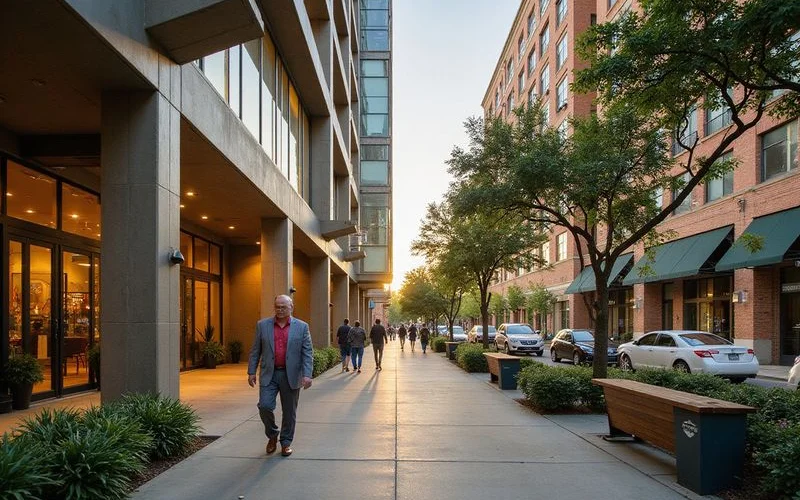
High rise vs. suburban living: the honest trade-offs
Many business owners eventually weigh the choice between a large suburban house and a compact downtown apartment.
| You gain | You give up |
|---|---|
| Walkability to work, dinner, and the trail | Private yard and attached garage |
| Staffed lobby, package room, controlled access | Elevator wait times several times a day |
| Pool, gym, and lounge without personal maintenance | High parking fees and limited guest parking |
| Views from floor-to-ceiling glass | Some noise from I-35 or busy entertainment districts |
| Fewer car trips and easier commutes | Higher rent per square foot |
The renters who truly love high rise living actively use the location. They walk to their Congress Avenue offices, run the Butler Trail before work, and meet friends on Rainey Street. Having a concierge sign for important business packages is a huge time saver.
The renters who regret the move end up driving everywhere and rarely visit the amenity deck. High-rise living also brings unique headaches like coordinating moving trucks through loading docks and paying premium rates for visiting clients to park. If you plan to drive daily, choosing a lower floor or a value tower slightly outside the core can save you $1,000 a month.
How to choose your first Austin high rise
Selecting the right building requires matching your daily routine to the specific features of a property.
- Start with your daily life. Where you work, how you get there, and what you do on weekends will quickly narrow down the right district.
- Set a real budget. You should target rent at around 30% of your gross income, plus extra for parking and fees. Most premium towers strictly require income to be 2.5 to 3 times the monthly rent.
- Decide what matters in the unit. You need to prioritize view direction, finding the quiet side of the building, square footage, pet policies, and parking availability.
- Compare net effective rent. Do not just look at the sticker price, because current 2026 concessions can drop your actual monthly cost significantly. Read our breakdown on net effective rent explained.
- Shortlist 3 to 5 towers. You must tour the actual units available rather than just the model apartments. Use our detailed checklist for comparing Austin high rises to know exactly what to inspect.
Let our experts help you
If you would rather skip the tedious research, that is exactly what our organization handles. We have personally toured all 23 premier towers in the city. The entire service is completely free to renters because the apartment communities pay the referral fee.
Tell us your specific move date, your precise budget, and your top priorities. We will then send 3-5 matched buildings complete with floor-level pricing and live concession updates.